
Matorral Beach and the Saladar de Jandía: a protected wetland beside Morro Jable
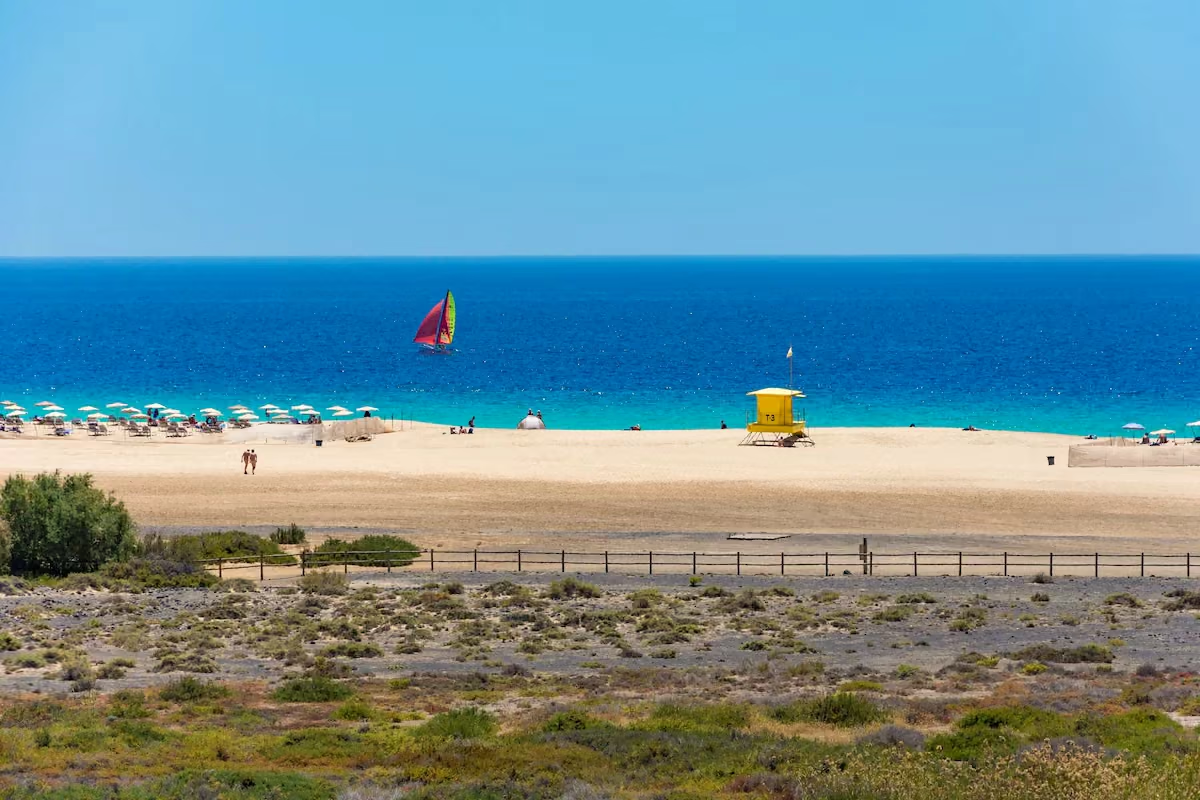
Matorral beach, Morro Jable's long main beach, borders the Saladar de Jandía, a protected wetland. The signs in the area ask visitors to use the beach access walkways. Here is why, and what to know before you head down.
What the Saladar de Jandía is
It is a coastal wetland of salt marsh. The signs on the beach describe it as a Site of Scientific Interest and an International Wetland within the Fuerteventura Biosphere Reserve. It is on the Ramsar list as site no. 1262, designated in October 2002.
It is the only site in the Canary Islands on the Ramsar Convention list. The Ramsar sheet describes it as one of the few coastal salt marshes in the archipelago, stretching along about 2.5 km of the island's southern coast.
What you will see: tides, scrub and birds
The signs highlight the contrast between the calm, crystal-clear sea, the white sand and dense vegetation. During spring tides the vegetated plains flood, forming a large lagoon to the north and smaller ones to the south, surrounded by micro-dunes with halophyte scrub, meaning plants adapted to salt.
The Fuerteventura stonechat (Saxicola dacotiae), a bird endemic to Fuerteventura, breeds around the salt marsh, according to the signs.
Why you should use the walkways
The signs are clear: walking outside the access points is prohibited. Foot traffic compacts the soil, hinders the natural regeneration of halophyte vegetation, disturbs invertebrates, reptiles and birds, and leaves litter. That is why access is channelled onto purpose-built walkways: there are three, plus an access at the southern end of the wetland.
The signs also ask visitors not to use the old paths: even if they are still visible in the sand, they are no longer the way in.
What changed in 2026
On 25 February 2026 the Cabildo de Fuerteventura approved the naturalisation project for the Saladar de Jandía, carried out by the public company Tragsa with a budget of almost €250,000. It involves dismantling the old wastewater treatment plant at Matorral beach, restoring the original ground level and replanting native coastal species, within a maximum of one year. The report does not mention any change to beach access.
Heading to the beach
- Always go down by the walkways or the southern access, not across the sand.
- Take your rubbish with you: the signs list litter among the damage to the wetland.
- From our apartment it is about 250 m to the beach, a 3 to 4 minute walk.
Frequently asked questions
Can I walk through the Saladar de Jandía?
Only by the designated access points. The signs at Matorral beach state that passing outside the walkways is prohibited and ask visitors not to use the old paths.
Why do lagoons form behind the beach?
Because of spring tides: seawater floods the vegetated plains, forming a large lagoon to the north and smaller ones to the south.
Is it a Ramsar site?
Yes: it is on the Ramsar list as site no. 1262, designated in October 2002.
Where to check
Information checked on . Timetables, fares and conditions change: confirm them on the operator's website before you set out.